


As a Salesforce Admin, I am currently preparing our org for a major structural update to the Service Cloud architecture. With the upcoming Summer ’26 release cycle, standard Omni-Channel is officially retiring. Salesforce is moving all customers to the enhanced version of the routing platform. The exact timeline for this rollout depends on individual organization release schedules, but the mandate is absolute: businesses relying on the legacy routing framework must prepare for a mandatory migration.
While Salesforce positions its upgraded framework as the future of real-time service execution, the mandatory upgrade is forcing many companies to ask a broader question: is native Service Cloud routing still the best fit for their total operational workflow?
Enhanced Omni-Channel may still be the right choice for service-focused teams. Other organizations need assignment rules that also cover leads, opportunities, accounts, and custom records. In this article I’ll explain what changes, what to audit, and when a broader assignment approach may be worth evaluating.
The Shift to the New Routing Architecture
Before outlining the necessary migration steps, it helps to understand what the updated system actually changes. Enhanced Omni-Channel routing represents the modern framework for Service Cloud. At its core, it still relies on familiar building blocks like queues, capacity limits, presence statuses, and automated flows. The fundamental shift lies in how the system executes these components behind the scenes.
Organizations typically see their first-response time improve by 40-60% when they transition from manual queue assignment to an automated, capacity-based model. The new architecture aims to maintain this impressive efficiency while offering a more dynamic way to evaluate agent availability and handle work interruptions.
A major visible change is how work is presented directly to the user. Standard setups split incoming tasks between distinct “New” and “My Work” tabs. The enhanced version consolidates everything into a unified Inbox. This setup gives agents a single view of both incoming requests and active tasks without requiring them to toggle between screens.
The image below highlights the Omni-Channel sidebar and wallboard, demonstrating the new unified Inbox experience.
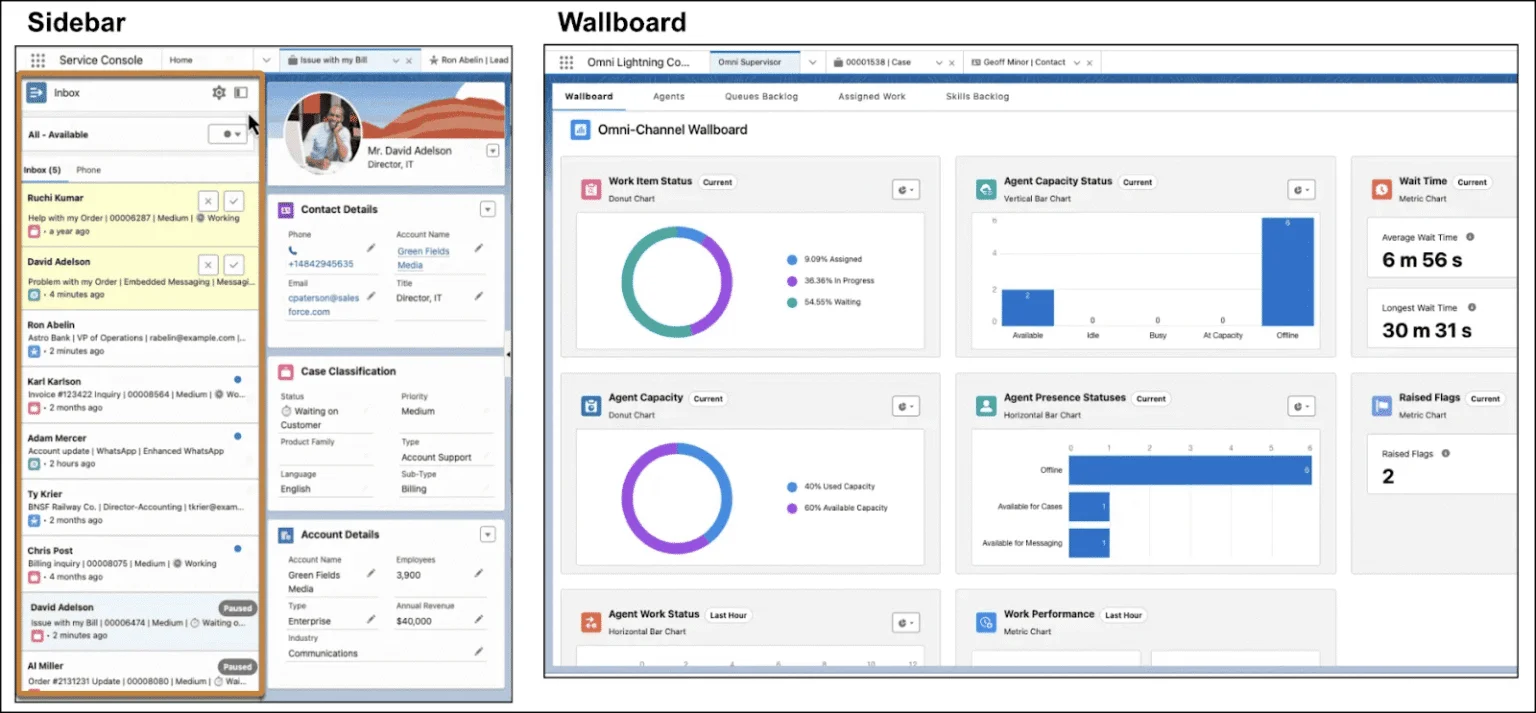
Example of the Omni-Channel sidebar and supervisor wallboard (Salesforce Trailhead).
While this looks like a simple visual adjustment, it heavily impacts daily agent workflows. It requires immediate updates to your internal training documentation, operational guidelines, and any standard operating procedures built around the old layout.
Comparing the Legacy and Modern Frameworks
To fully grasp the scope of the standard omni-channel retirement, let’s compare the operational behavior of both systems side by side is highly useful. The table below outlines the core functional differences.
| Feature Area | Legacy Standard Model | Modern Enhanced Architecture |
| Work Experience | Items are separated into New and My Work tabs. | A single, unified inbox displays all active and pending items. |
| Capacity Handling | Uses a static model permanently tied to the assigned work item. | Evaluates capacity dynamically and supports interruptible work handling. |
| Assignment Logic | Driven almost entirely by queues and basic routing rules. | Expands options to include flows, specific skills, and direct reassignment from the record page. |
| Supervisor Visibility | Standard oversight views of basic agent status. | Upgraded views incorporating real-time insights and monitoring tools. |
| Future Development | No new features or updates are planned for this version. | All future Service Cloud routing updates will be built exclusively here. |
Aligning Record Types: Cases vs. Leads
Optimizing record assignment is directly tied to customer experience and retention. Recent industry surveys reveal that 92% of customer service professionals consider building strong relationships more critical than ever, while 82% note that customer expectations have increased significantly compared to previous years. Delivering fast, accurate responses across all touchpoints depends on a reliable routing foundation.
Native Omni-Channel case routing Salesforce performs reliably when operational workflows align strictly with Service Cloud design patterns. Standard setups handle high-volume ticket distribution with ease, balancing agent capacity, utilizing skills-based parameters, and providing managers with real-time queue visibility.
However, we see clear challenges when teams attempt to adapt these tools for sales workflows. While Salesforce Omni-Channel lead routing is possible, it is not an out-of-the-box feature. Operations teams must build custom flows, complex triggers, and auxiliary queues to route incoming prospects effectively. As business rules expand to include routing by regional territory, language skill, or account tier, maintaining these custom flows becomes increasingly difficult. Misrouted records rarely trigger system error notifications. Instead, leads simply sit unassigned in hidden queues, causing response times to lag and hurting conversion metrics.
Critical Steps for the Standard Omni-Channel Retirement Audit
Preparing for the standard Omni-Channel retirement is not as simple as clicking an activation toggle in the setup menu. Untangling legacy technical debt built up over years of system administration requires a systematic audit across several core areas.
1. Legacy Channel Dependencies
Standard and enhanced service channels do not use the same framework. Identify every legacy channel that still depends on Standard Omni-Channel, including:
- Standard Chat configurations
- Legacy Live Agent deployments
- Older messaging integrations tied to standard routing
Upgrade or replace these dependencies before the enhanced model becomes the only routing path. Otherwise, incoming work may not be delivered as expected.
2. Hidden Routing Complexity
Routing logic is often spread across queues, assignment rules, Flow, Apex, skills, capacity settings, priorities, and reports. Document where each rule lives, what it controls, and who owns it. This map makes it easier to spot conflicts and hidden dependencies.
Pay particular attention to rules that change ownership, move records between queues, or depend on agent status. Enhanced Omni-Channel can evaluate capacity and availability differently, so old logic may produce new outcomes.
Exploring Purpose-Built Assignment Alternatives
Because the standard Omni-Channel end of life requires a thorough review of your CRM infrastructure, many organizations leverage this transition to address long-standing routing limitations. For enterprise teams needing to distribute records across Sales, Service, and Marketing clouds simultaneously, adopting a dedicated record distribution layer is often much more efficient than building complex custom flows inside native Service Cloud.
Distribution Engine by NC Squared is one Salesforce AppExchange example. It provides a cross-object assignment layer for Leads, Cases, Opportunities, Accounts, and custom objects. This does not mean every organisation needs a separate product. It is useful as a comparison point for teams whose routing requirements extend beyond Service Cloud.
Instead of treating each object as a separate routing project, the tool stores assignment logic in one framework. Operations teams can adjust rules without rebuilding several disconnected Flows or queue structures.
Typical capabilities include:
- Balanced allocation: Round robin, load balancing, weighting, and workload caps.
- SLA-based reassignment: Move a record when it is not accepted or handled within a defined time.
- Territory and attribute matching: Route by region, account ownership, language, product, or custom field values.
- Operational ownership: Let authorized sales, service, or operations teams maintain rules without changing Apex code.
The screenshot below shows how weighting and caps are configured for a team inside Salesforce.
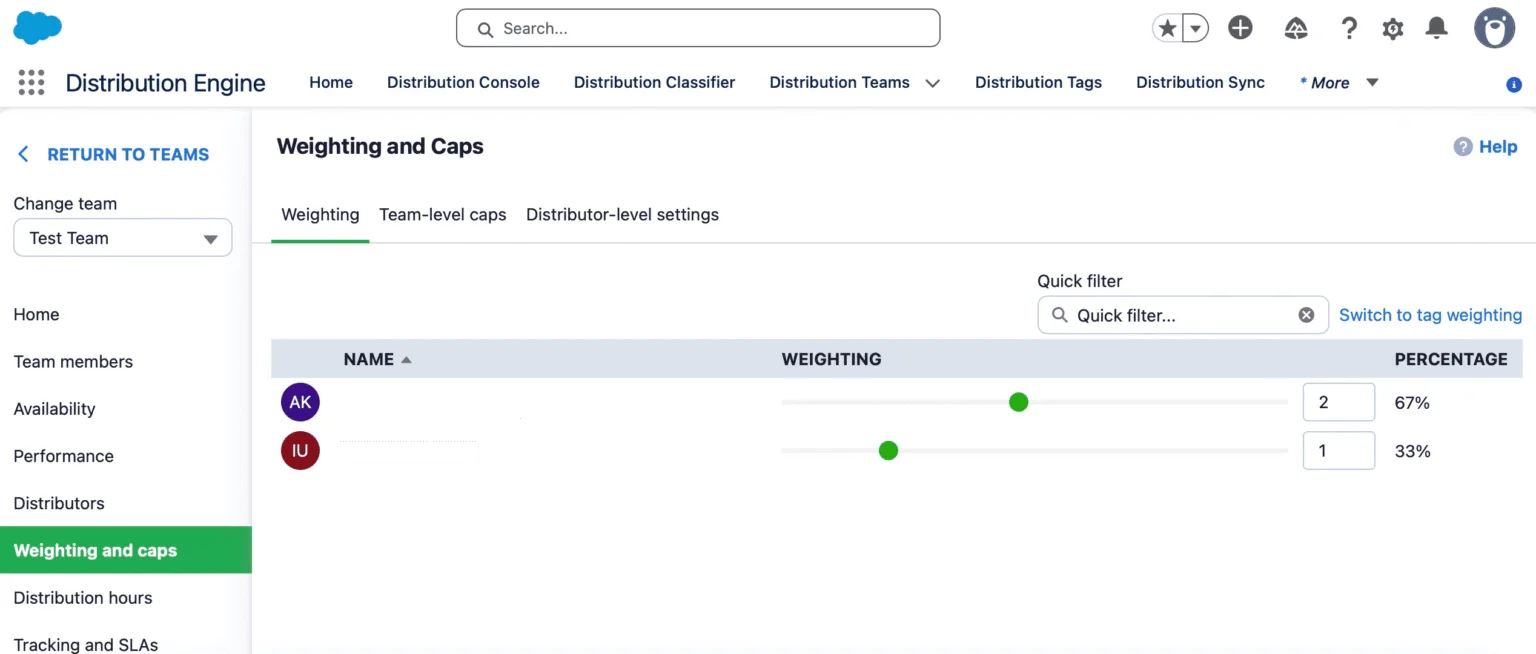
Example of team weighting and caps inside Distribution Engine.
A separate app can reduce the number of custom routing layers, but it also adds licensing, implementation, and governance requirements. Enhanced Omni-Channel is usually the simpler choice when service execution is the main need. A purpose-built alternative is more relevant when rules span many objects, departments, territories, and SLAs.
Final Thoughts
The Salesforce standard Omni-Channel retirement represents a fundamental structural shift in how work is distributed across the Service Cloud environment. As organizations are forced to audit their existing frameworks, the transition uncovers hidden complexities within legacy flows, service channels, and queue configurations. Rather than viewing this solely as a mandatory technical patch, operations teams should use this period to evaluate whether their current routing behavior truly aligns with their broader business goals. Deciding between migrating to the enhanced native framework or adopting a dedicated, cross-object assignment layer will ultimately determine how efficiently an organization can scale its customer response workflows in the future.